My Neighbor Asked Me To Fix Her Gate. She Said, “You Deserve A Little Extra Reward.”
They called this place a hollow on the maps—County Road 12, a scatter of houses and farms where the land felt older than the people on it. My house sits near the shoulder of that road: cedar shingles gone silver at the edges, a porch that leans like an old man to one side, and a squeaky screen door that announces me to the empty fields at dawn. I’m Caleb. I’m twenty-six. I wake before the sun, brew coffee in a dented pot, and go fix whatever’s fallen apart that morning—fences, pumps, roofs, the kind of work that lets you sleep even when the world is rough.
The first time Leah asked me to help, the sky was the color of ash. I was walking home from the Jensen place with a toolbox thunking against my hip when a voice called from the other side of a patchy field.
“Excuse me—could you help me with my gate?”
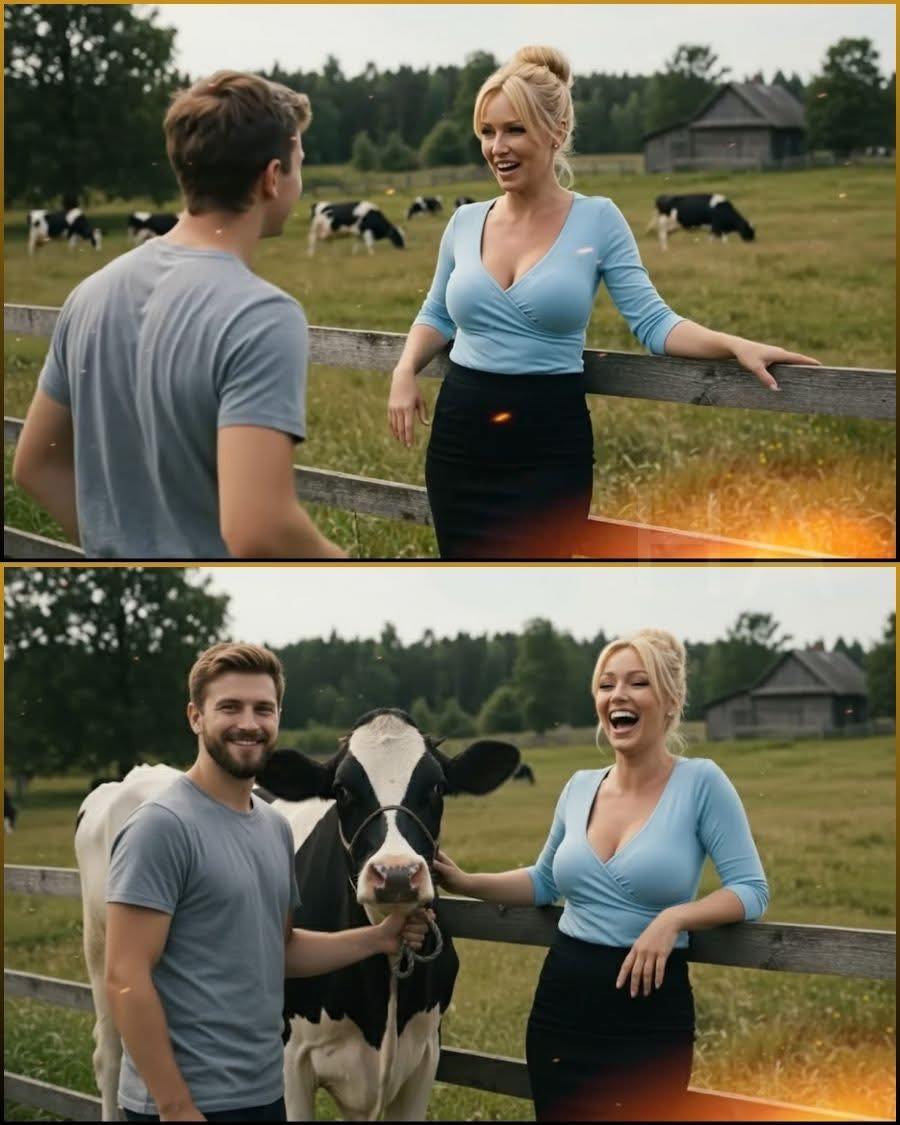
She stood there, a hand shading her eyes, leaning against a sagging cedar gate. She could have been in her early forties; she could have been older. Up close, the lavender in her hair ribbon mixed with earth and the kind of tired that comes from keeping something alive. She wore a white button-down, sleeves rolled, the hem smudged with dirt. Her eyes were hazel and steady, and when she said her name—“Leah Monroe”—it sounded like it belonged there, in that long, quiet place.
“Caleb,” I said, caps tip the habit my dad taught me. “Give me an hour.”
It was nothing spectacular—one hinge rusted clean through, the post rotted at the base. I had an extra piece of cedar in the truck from a job last week. While I worked she watched the clouds, only glancing at me sometimes, like she was afraid to be too curious. I shoveled, pried, hammered until the new post sat true. The gate swung smooth.
“You deserve a little extra reward,” she said after I wiped the sweat and sawdust off my hands and started to pack up. It was said with no flourish, like a sentence offered and then left to settle. “If I bake an apple pie sometime, you won’t say no, will you?”
I gave a crooked half-laugh. “Pie’s hard to turn down.”
After that, she watched my back more days than not. She was thoughtful, not talkative for talk’s sake, and when she did speak it was like she’d been saving words for the right moment. A week later she knocked on my fence about a pump that had died in her shed. Ten minutes, I told her; ten minutes turned into a thermos of coffee and a sandwich she sliced and handed me without ceremony. Her kitchen smelled like basil and fresh bread. She’d started her hands on things: tomatoes, little jars of honey, makeshift beehives in a fenced patch behind her house. She’d been a manager of clinics in Seattle, she told me one afternoon as I tightened a belt and the pump coughed back to life, and then she shrugged like the words belonged to someone else. Burnout, she said simply. Sold what she had and drove until the mountains looked right.
That picture didn’t reconcile easily with the woman who once stood on my porch at midnight, soaked to the bone, a wicker basket clutched to her chest and a slice of pie she’d worry over in a blackout. “Powers out,” she told me when I opened the door to a storm that sounded like the sky was falling. “I baked an apple pie, but I have no light to see if it’s done.”
She came in like a storm itself—quiet, sudden, and leaving scent and warmth behind. I handed her a towel. She laughed once, a little startled, when she saw the raccoon streaks of mascara. We ate warm pie standing at my counter—the house dim, lit only by the orange of the woodstove and a kerosene lamp I dug out of the closet. There was a smallness to it that felt huge: the crust flaked between my fingers and the filling burned the roof of my mouth and I thought about my mom, who used to make coffee so strong it could stand a spoon.
“We ate like two people who were saving something up,” she said later, like it was a confession.
“You bake like this all the time?” .